Six prompts run through ChatGPT Images 2.5 and 2.0 at the same size and quality tier: a poster whose credit block is set small, a diagram with seven labelled parts, a portrait mixing skin, fabric and metal, the same face carried into a new setting from a reference photo, a single-element edit with a long preserve list, and a brief you can check by counting. Each prompt is printed under its pair, so you can run the same test on your own work.
The same prompt, six times over
Small type: a poster with a credit block
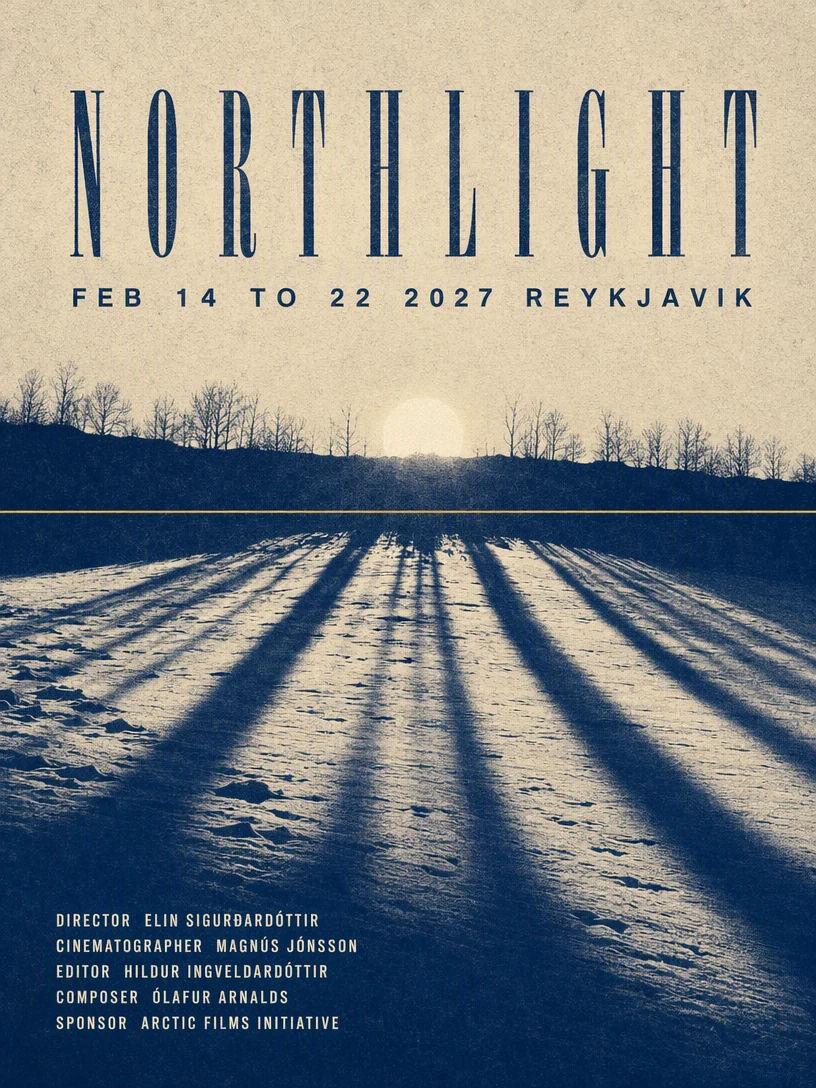
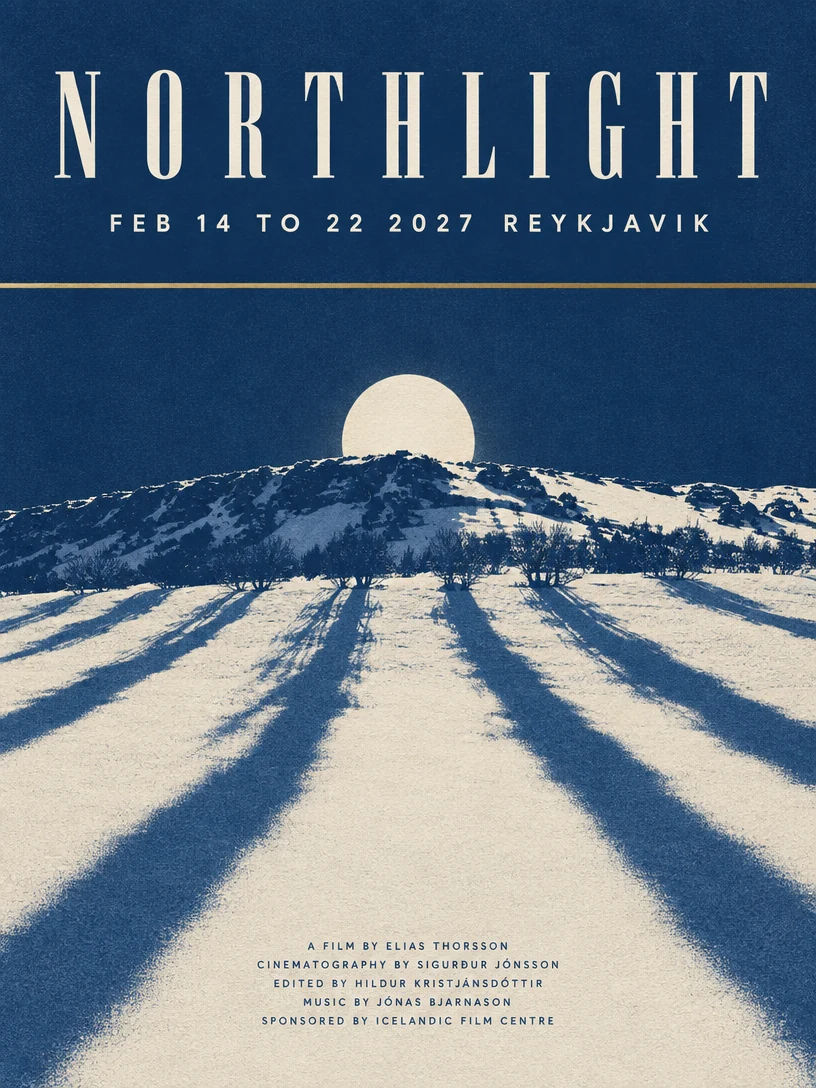
A printed film festival poster, offset litho look with visible paper tooth. A single low winter sun sits behind a bare ridge line, throwing long blue shadows down a snowfield in the lower half. Flat two-colour treatment, deep navy and a warm bone white, one thin brass rule across the middle. The title NORTHLIGHT is set once across the upper third in a tall condensed serif, letterspaced wide. Beneath it, on one line, FEB 14 TO 22 2027 REYKJAVIK. At the foot, a five-line credit block in small grotesque caps, legible but quiet, naming a director, a cinematographer, an editor, a composer and a sponsor. Every word crisp to the edge of the letterform, no extra copy anywhere in the frame.
Infographics: a labelled diagram with real numbers
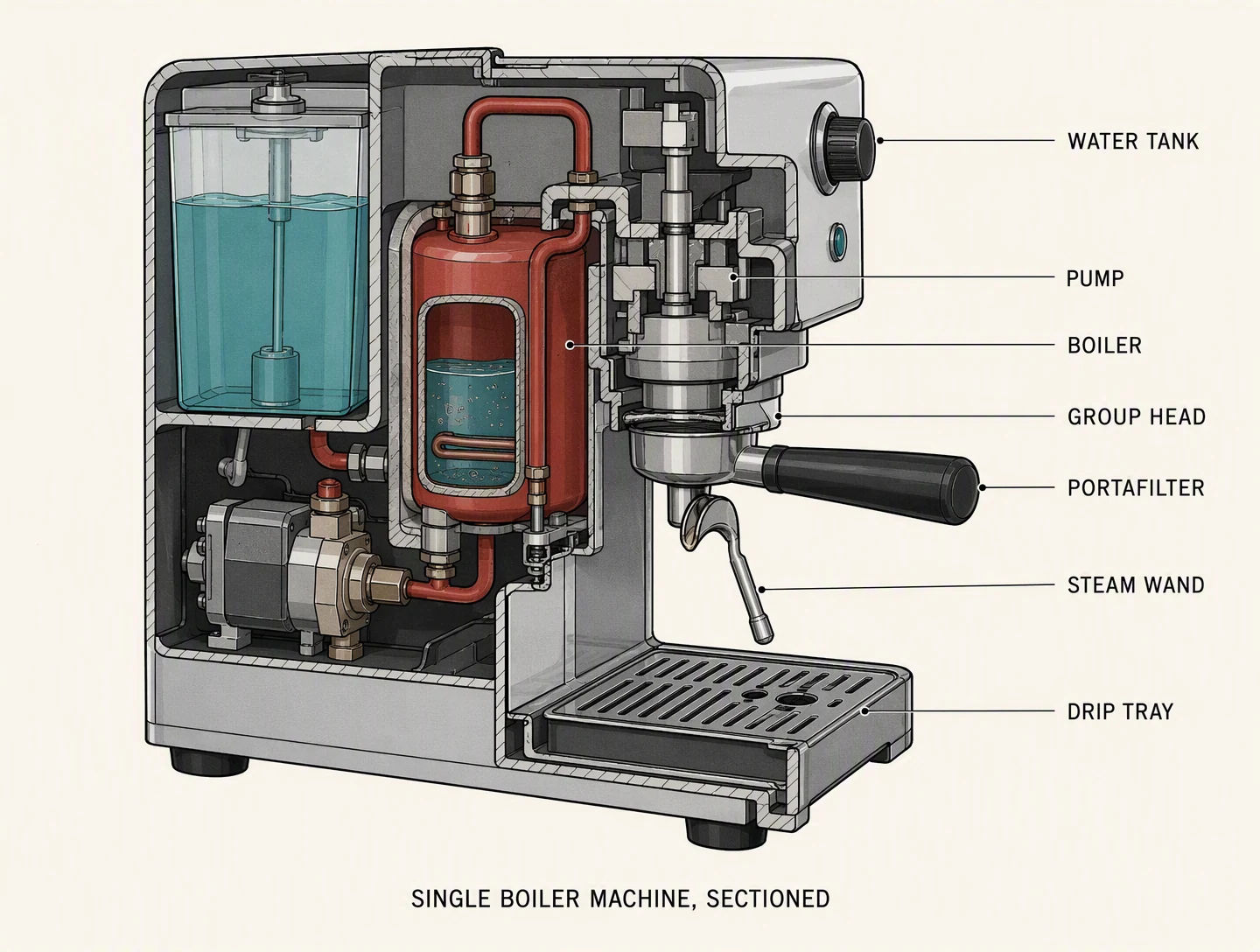
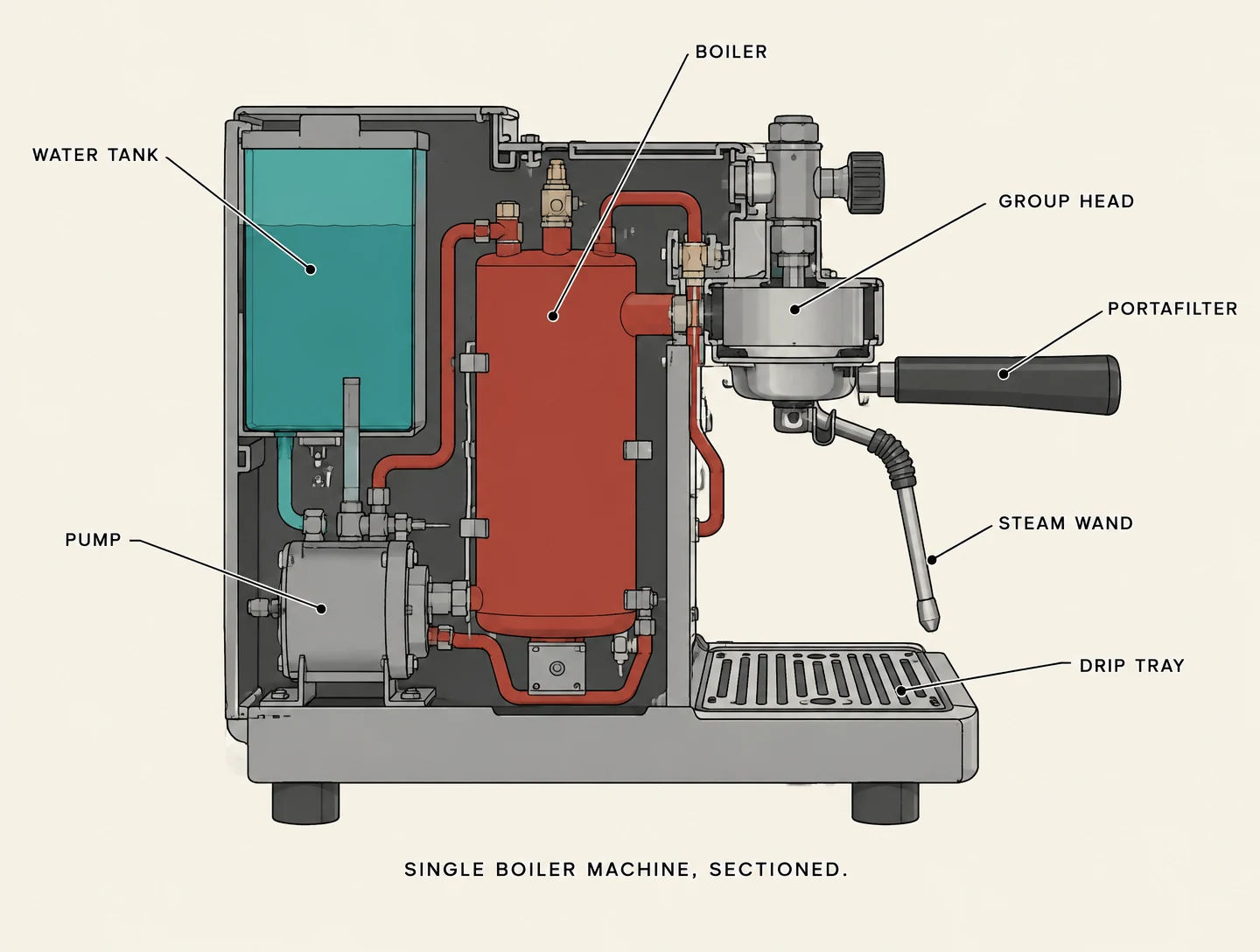
A technical cutaway illustration of a domestic espresso machine, drawn as a precise line diagram with flat colour fills, on a warm off-white ground. The machine is sectioned so the water tank, pump, boiler, group head, portafilter, steam wand and drip tray are all visible. Seven thin callout lines run outward to labels in small grotesque caps, each line touching the part it names, reading: WATER TANK, PUMP, BOILER, GROUP HEAD, PORTAFILTER, STEAM WAND, DRIP TRAY. A one-line caption sits under the drawing reading SINGLE BOILER MACHINE, SECTIONED. Steel grey, oxide red and a single teal accent, flat tone only, no clip art, no decorative gradients.
Detail: skin, fabric and metal in one frame
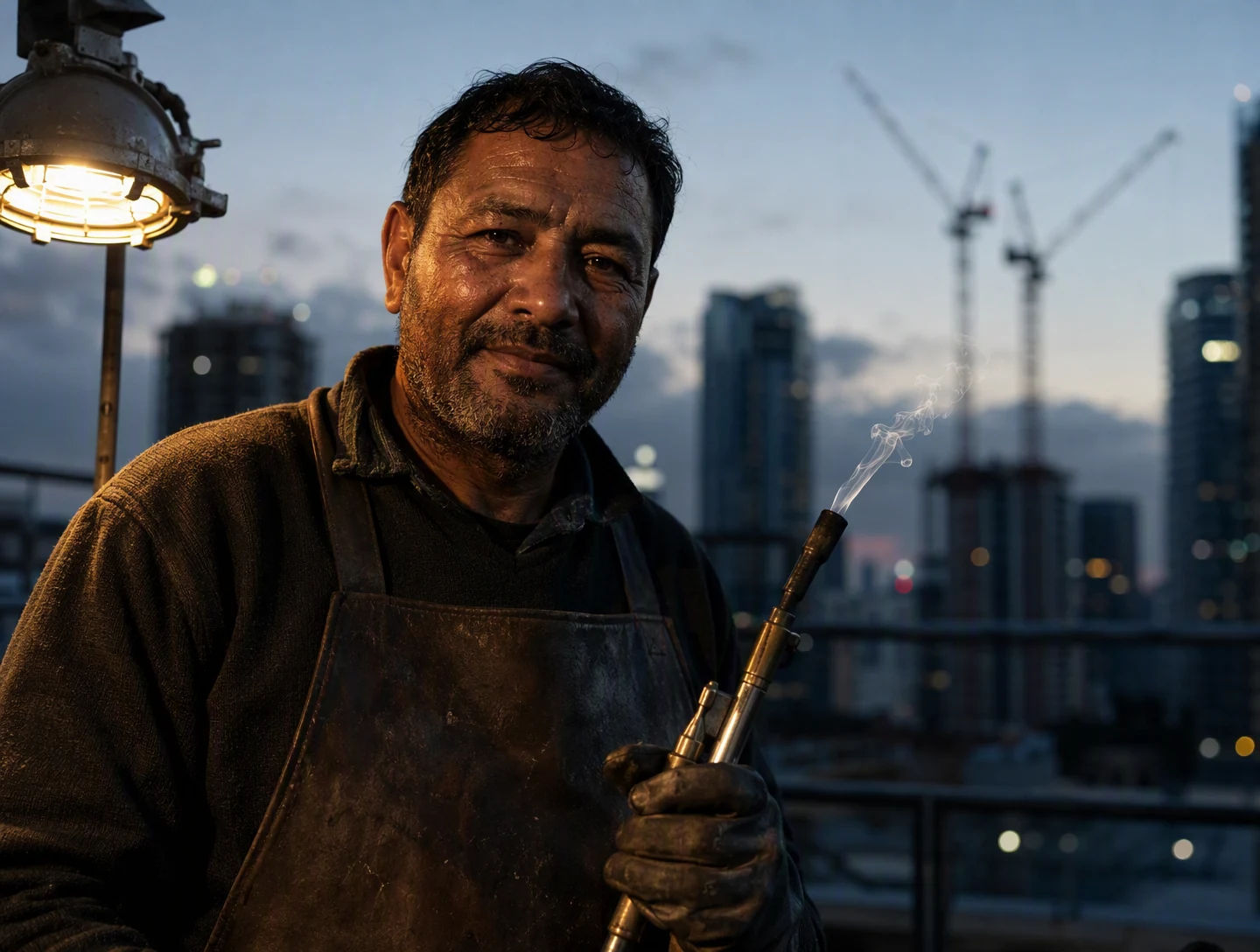
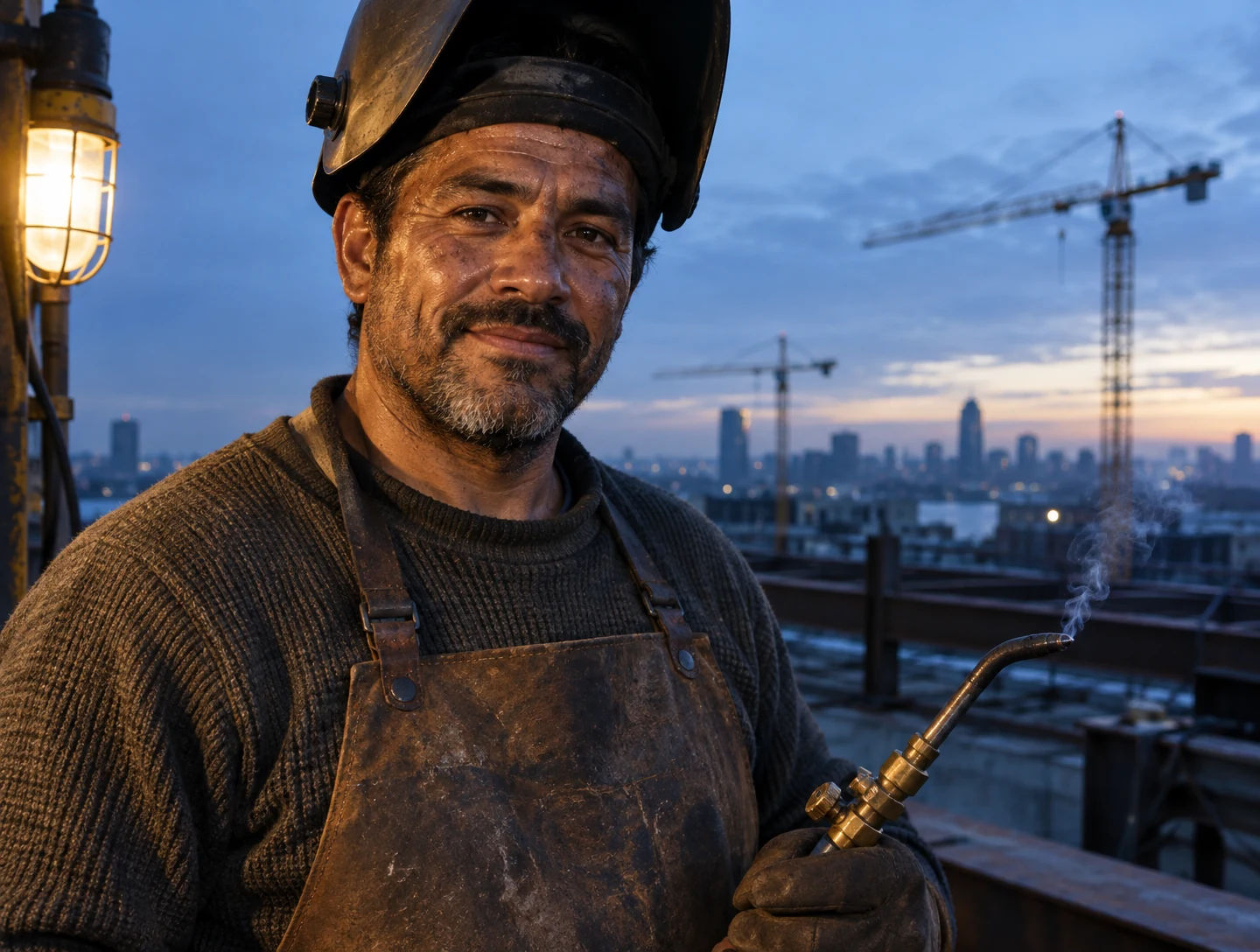
35mm portrait of a rooftop welder at first light, cold blue dawn sky behind him with a single warm work-lamp lighting his face from the left. Early forties, weathered brown skin with real pore texture, a few days of grey-flecked stubble, sweat sheen across the forehead, deep smile lines. He wears a scuffed leather welding apron over a coarse thermal weave, and a brass-bodied torch rests in his hand with a thin curl of smoke leaving the tip. Waist-up, shallow depth of field, cranes soft behind him. Honest documentary tone, natural uneven skin, no retouching.
Reference fidelity: the same face, a new setting
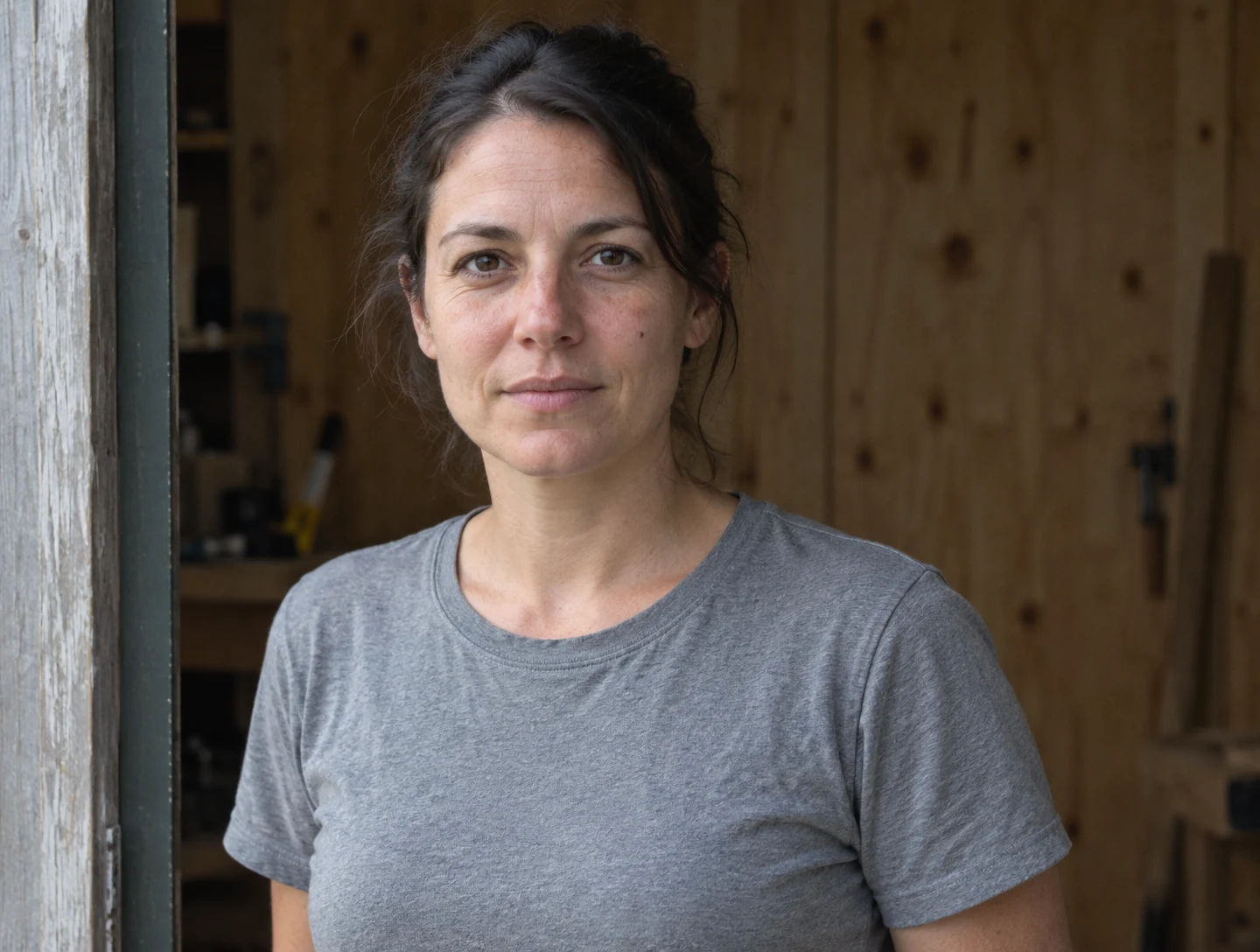
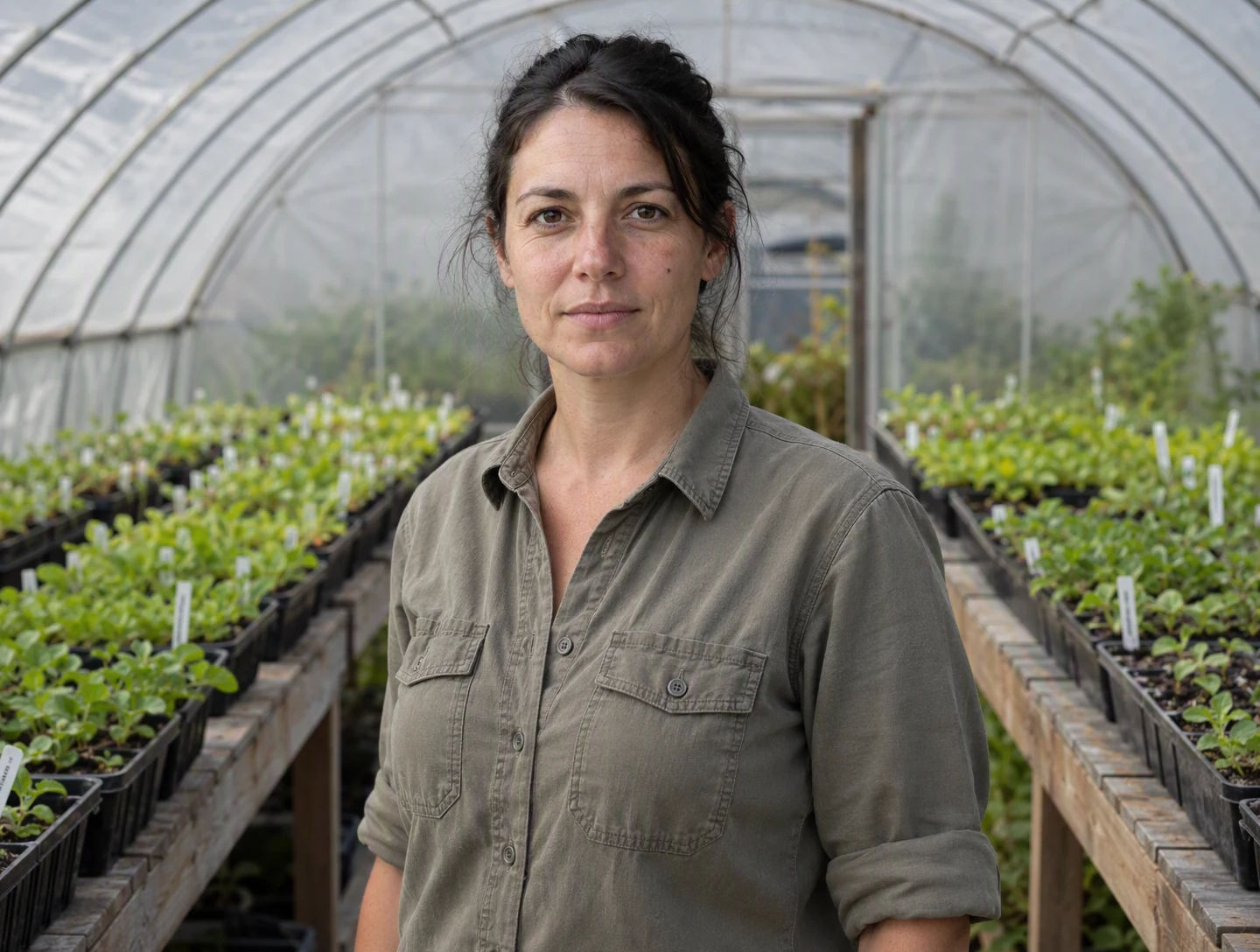
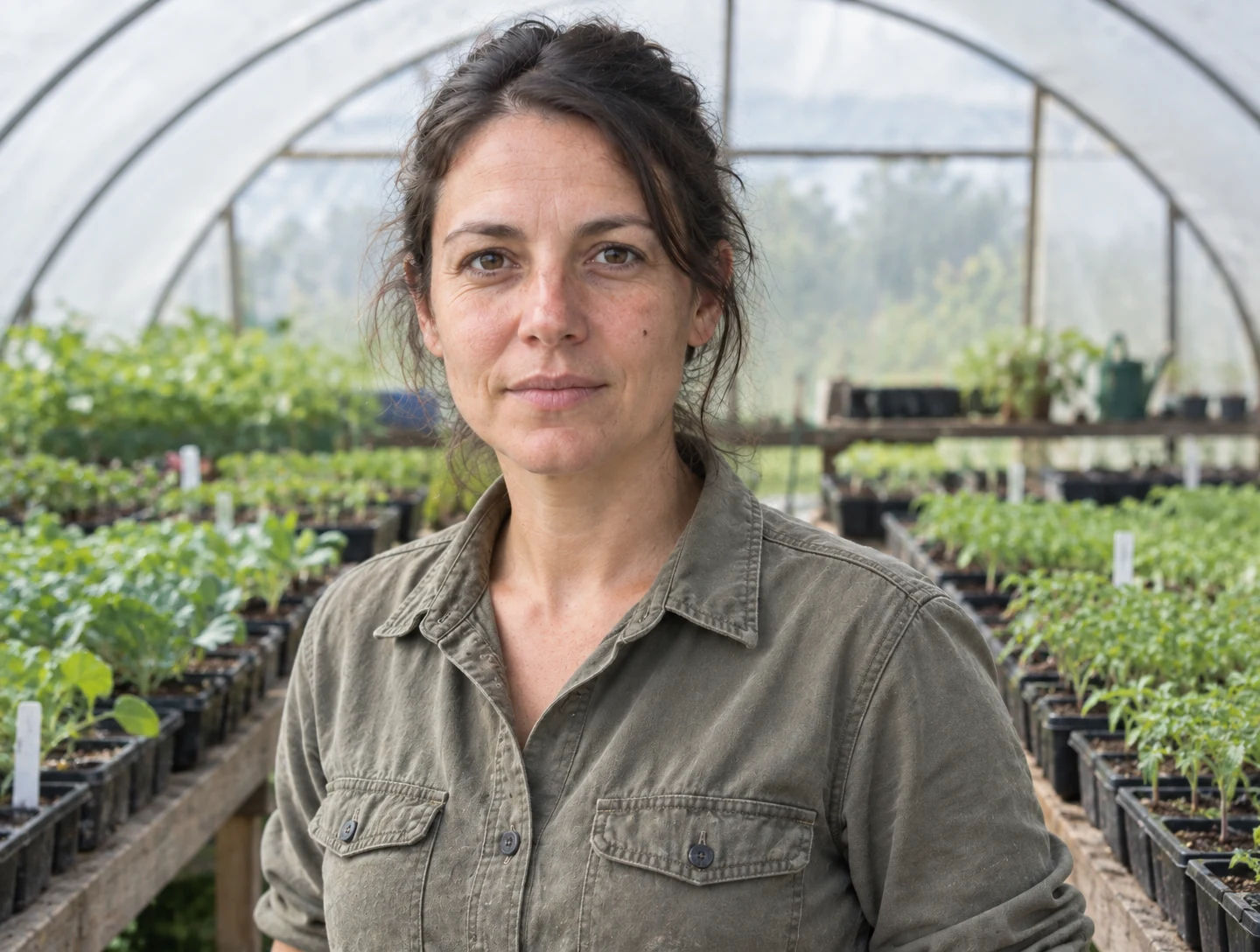
Using the attached photograph as the reference for the person, place the same woman in a plant nursery at midday, standing between two rows of seedling trays under a polytunnel, diffused daylight through the plastic above her. Keep her face, bone structure, eye spacing, hairline, skin tone and the small mole on her left cheek exactly as they are in the reference. Change only the setting, the wardrobe to a canvas work shirt, and the light. Three-quarter framing, natural expression, no retouching.
Editing: change one thing, keep everything else
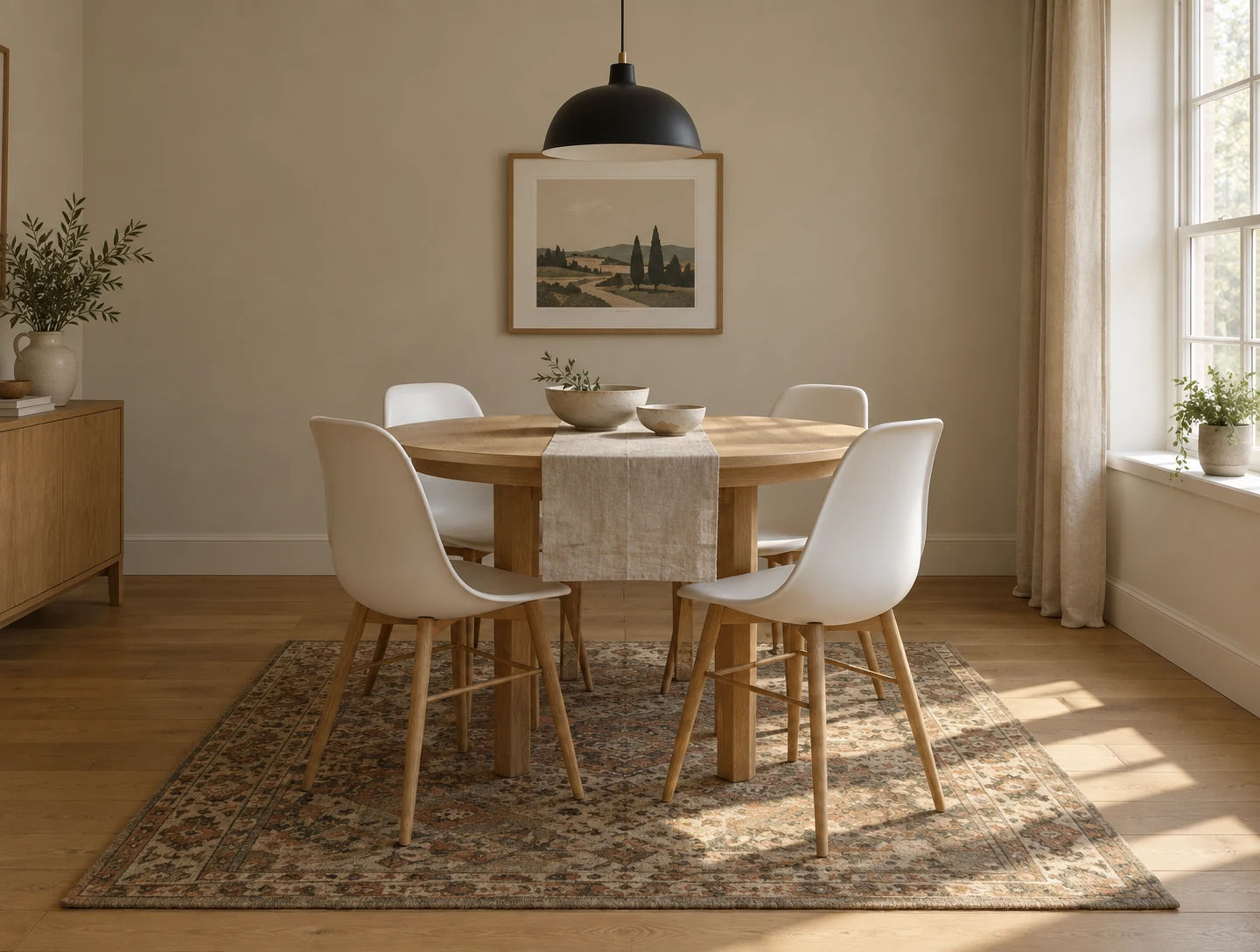
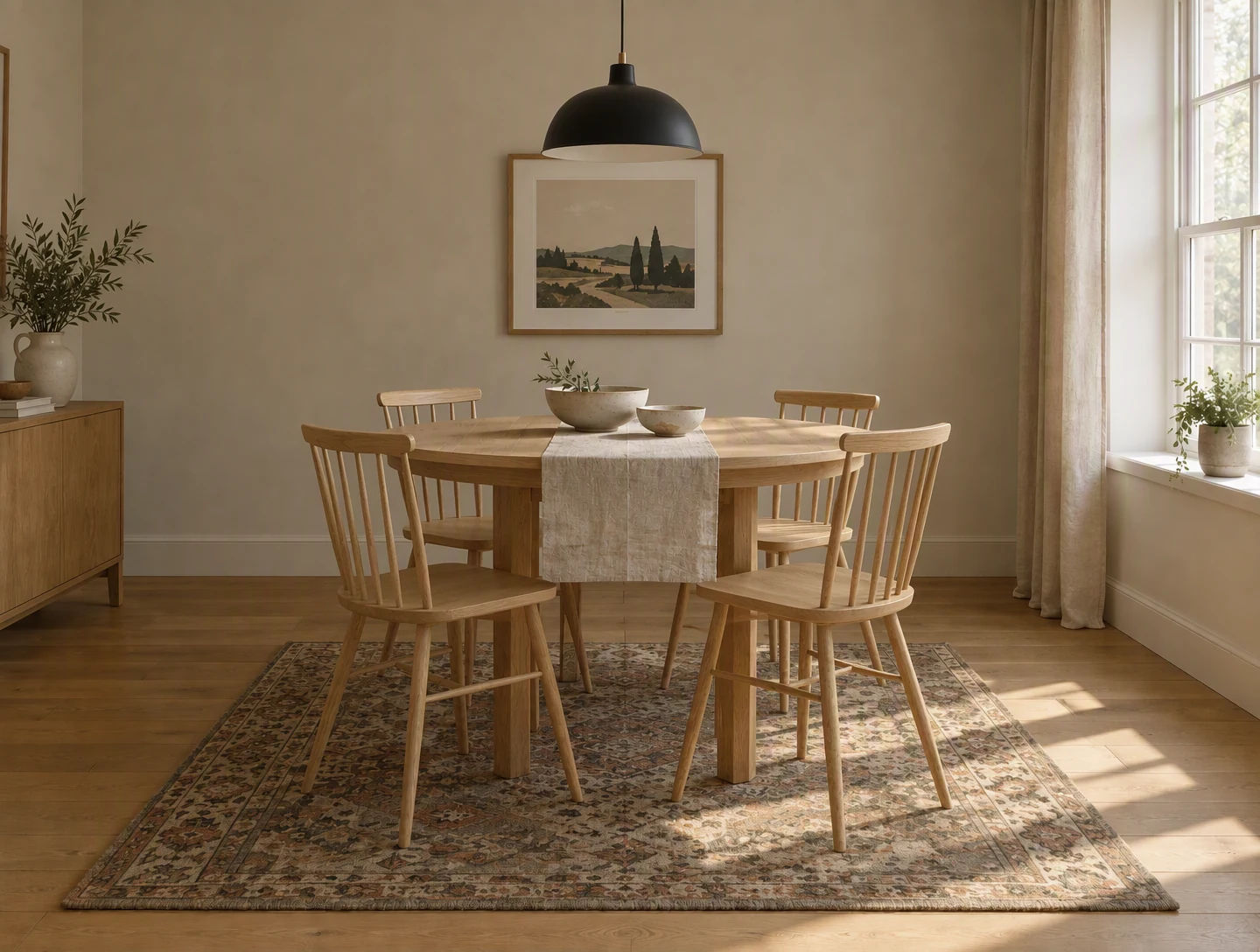
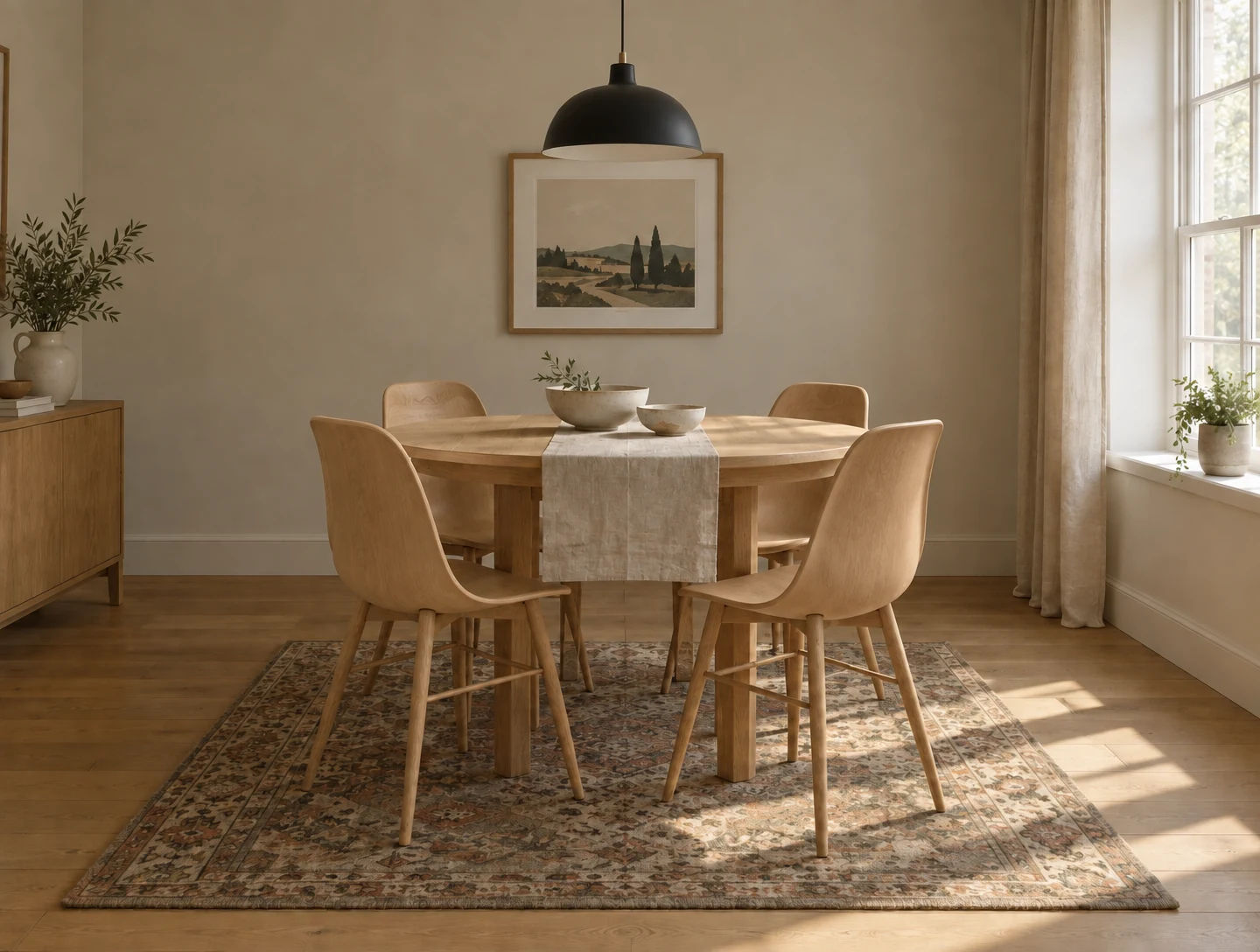
Replace only the four white dining chairs with pale oak chairs of the same shape and proportion. Preserve the camera angle, the framing, the table, the table setting, the rug, the floorboards and their grain direction, the wall colour, the picture frame and its position, the pendant lamp, the window, the light direction, every shadow on the floor, and the overall image quality. Keep all other aspects of the image unchanged.
Instruction following: countable, placeable detail
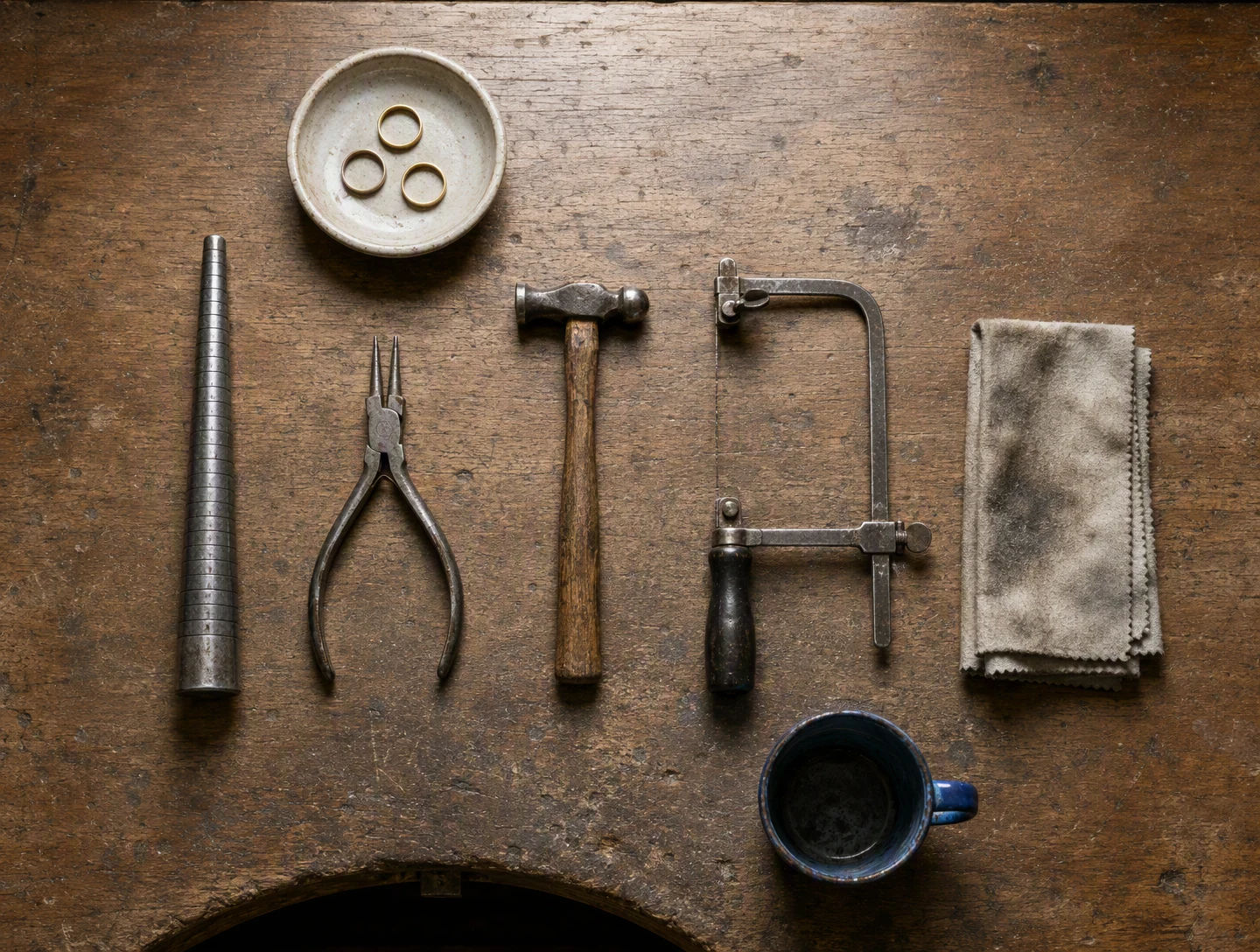
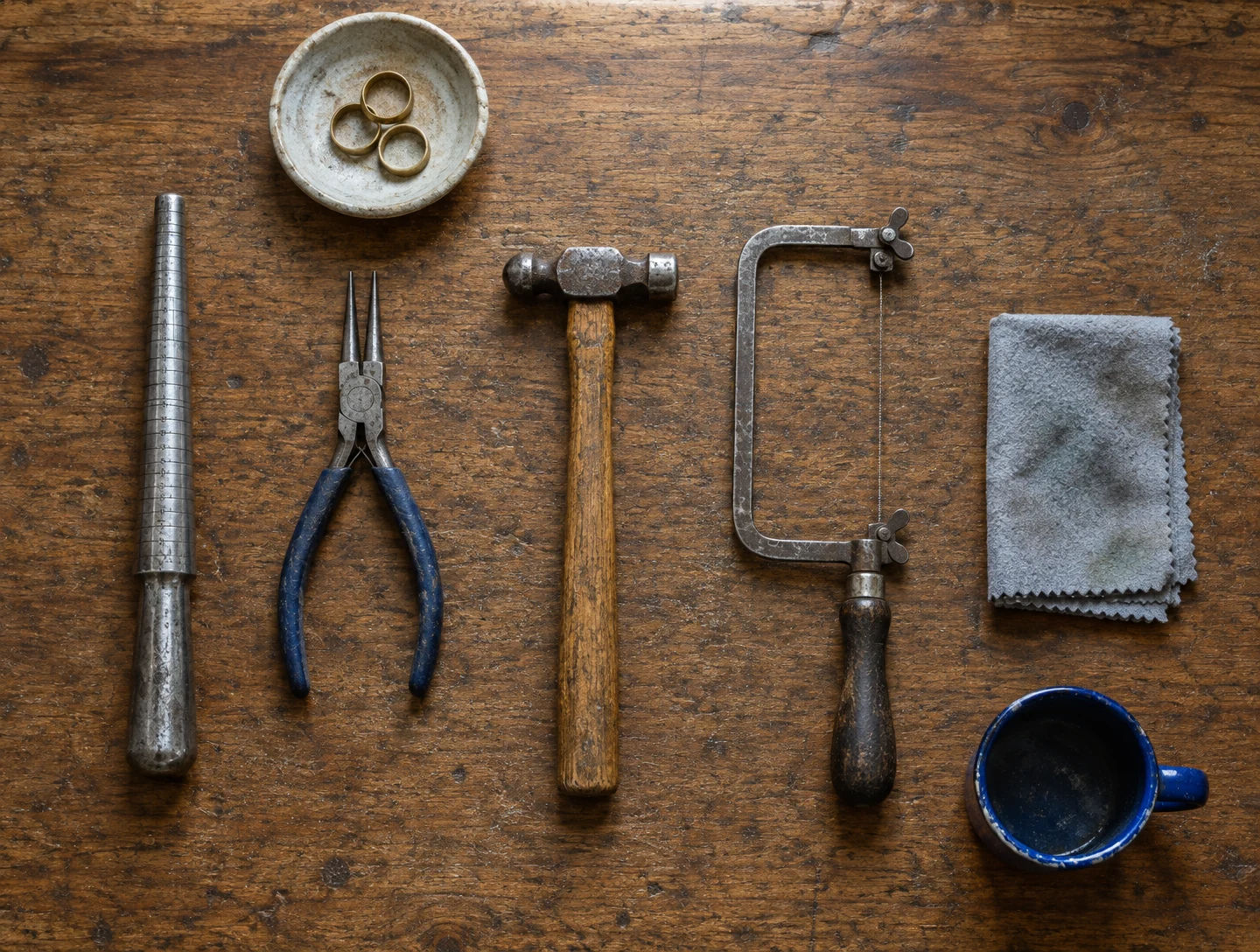
Top-down photograph of a jeweller's bench in worn oak, shot square from directly above under one soft window light from the top of the frame. Exactly five tools lie in a single row across the middle, evenly spaced, left to right in this order: a steel ring mandrel, a pair of round-nose pliers, a small ball-peen hammer, a jeweller's saw frame, and a folded polishing cloth. A shallow ceramic dish holding exactly three brass rings sits above the row, left of centre. A blue enamel mug sits below the row, right of centre. Nothing else is on the bench. Real wear on every tool, fine metal dust in the grain of the wood, honest short shadows falling downward.
The settings are half the upgrade
Two of the differences are not model behaviour at all, and they are easy to miss because nothing in the prompt changes.
The quality tiers above high. Images 2.0 stopped at high. 2.5 adds xhigh and max, each slower than the last. OpenAI positions them for fine print detail on print-bound work.
The frame is no longer three shapes. Images 2.0 offers 1:1, 3:2 and 2:3 in Studio, up to 2K. Images 2.5 takes anything from 1:3 to 3:1, in custom sizes in multiples of 16 pixels, up to a 3840 pixel edge. Square is the most expensive shape at any given tier, so a 16:9 frame of the same nominal resolution costs less than a 1:1.
Flare or Sunburst. Asking Morphic for ChatGPT Images 2.5 gives you GPT-Image-2.5 Flare, the fast default and the model in every test above. Sunburst is the precision tier and takes longer; OpenAI suggests proving quality on Sunburst first, then testing whether Flare clears the same bar.
Running both on Morphic
Both generations are available on Morphic, in the same chat and on the same Canvas, with reference images, editing and the full set of quality tiers. That is what made this page possible: the same prompt, sent to both, with nothing else changing.
It also makes the comparison worth repeating on your own briefs. Send one prompt to ChatGPT Images 2.5 and to ChatGPT Images 2.0 side by side, and if neither answers it, send the same prompt to Nano Banana Pro, Seedream 5 Pro or Flux 2 Pro without leaving the workspace.
FAQs
OpenAI names sharper detail, more natural lighting and texture, better preservation of subjects from reference photos, steadier editing across a long conversation, more accurate infographics, and generation up to 50% faster. 2.5 also adds two quality tiers above the old ceiling and output up to 4K.
No. The prompt surface did not change between the two generations, so wording that worked on 2.0 works on 2.5. What is worth revisiting is settings: the quality tier, the output size, and whether the job wants Flare or Sunburst.
OpenAI measures GPT-Image-2.5 Flare at up to half the latency of Images 2.0 at comparable quality. Render time moves with the prompt, the reference images and the quality setting, so it is worth measuring on your own briefs.
Two tiers new in 2.5, sitting above the old ceiling of high. Each step takes longer to render, and OpenAI positions them for fine print detail on print-bound work.
Flare is the default and the model in every test on this page. OpenAI describes it as matching GPT Image 2 quality at up to half the latency, and Sunburst as the precision tier for work needing tighter control across a chain of edits, with longer generation times.
Yes. ChatGPT Images 2.5 and ChatGPT Images 2.0 both run on Morphic, in the same chat and on the same Canvas, with reference images, editing and the full set of quality tiers. That is how every pair on this page was made.